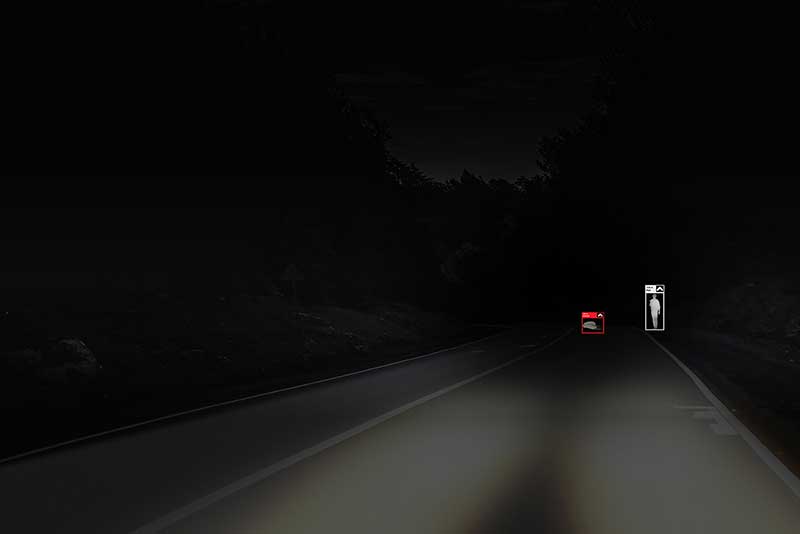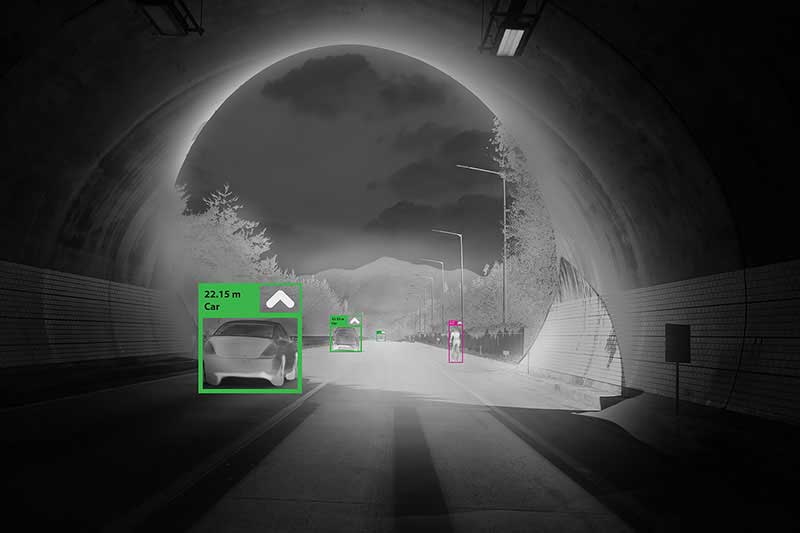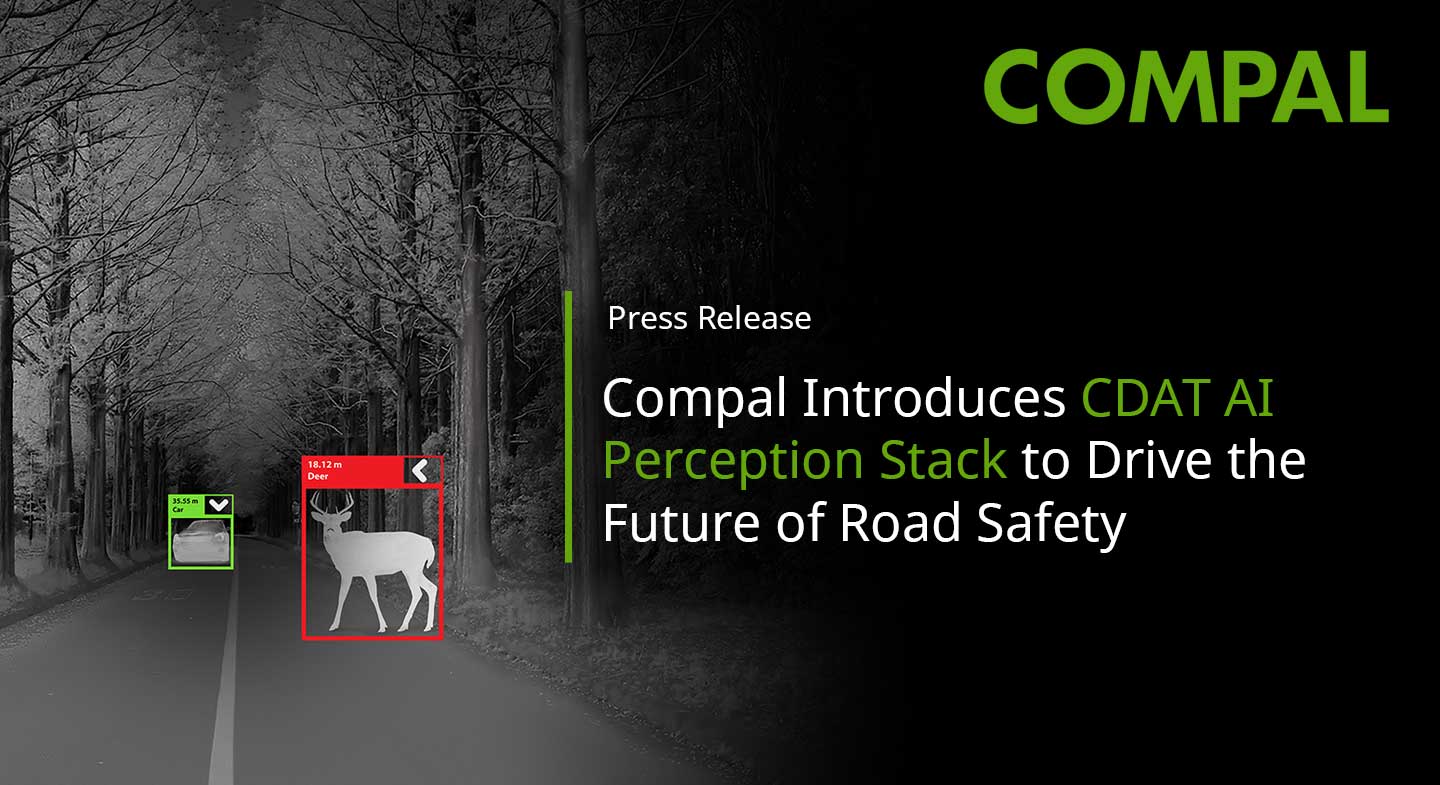
Our CDAT™ platform (Classification · Distance · Action · Tracking) integrates infrared sensing with AI-driven prediction to support reliable safety decisions across diverse driving environments.
When paired with the Infrared Technology System (ITS), the vehicle gains perception in conditions where conventional sensors begin to lose confidence, identifying pedestrians, cyclists, and other vulnerable road users through adverse weather, low visibility environments, and challenging lighting conditions.
Together, CDAT™ and ITS enhance next generation ADAS performance and align with emerging safety expectations, including FMVSS 127 regulation and Global NCAP.
In April 2024, NHTSA introduced FMVSS 127, requiring pedestrian automatic emergency braking (P-AEB) systems to function in both day and night conditions by 2029. CDAT™ supports this regulation by providing consistent detection of vehicles, pedestrians, two-wheelers, and other vulnerable road users in daytime, nighttime, and low visibility conditions.
Stay up to date with the latest innovations, industry trends, and safety breakthroughs from Compal.

quick links